Categories
Thai food – Street food, regional dishes & restaurants
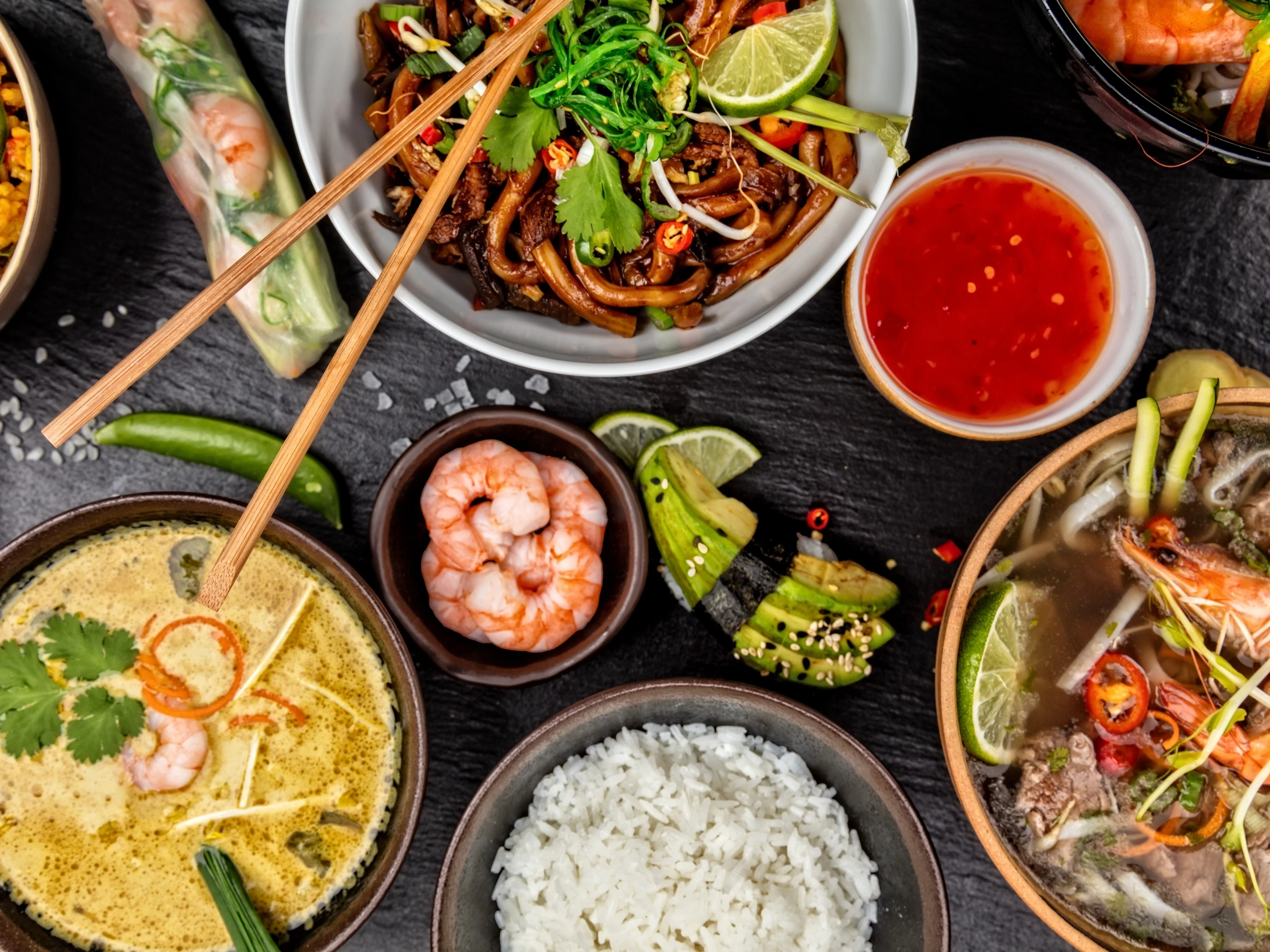
Pad Thai, curries and mango sticky rice are only a small part of Thai food. What you find on the table changes considerably from one region to another. Chiang Mai is known for dishes such as Khao Soi and Sai Ua, a spicy Northern Thai sausage, while Isan in northeastern Thailand is closely associated with Som Tam and Larb. Along the southern coast, fish, seafood and intensely flavored curries play a much bigger role.
The best way to experience this variety is through different types of meals. Night markets make it easy to try several dishes in one evening, while local restaurants offer a closer look at the food of each region. Selected resort restaurants combine Thai cooking with distinctive settings and a more relaxed atmosphere. A cooking class is another option for anyone who wants to learn more about the ingredients and techniques behind the dishes.
What makes Thai food unique
Many Thai dishes are built around a balance of salty, sour, sweet and spicy flavors. Fish sauce adds savory depth, lime and tamarind bring acidity, palm sugar adds sweetness and chili provides heat. Lemongrass, galangal, Thai basil and makrut lime leaves give soups and curries much of their distinctive character.
Rice is far more than a side dish. Jasmine rice accompanies many curries and other dishes, while sticky rice, known in Thai as Khao Niao, is especially common in northern and northeastern Thailand. Meals are often shared, with several curries, soups, vegetable dishes and meat dishes ordered for the table and eaten with rice.
Not all Thai food is spicy. The amount of chili depends on the region, the recipe and often the individual kitchen. Anyone who prefers milder food should mention it when ordering. “Mai phet" can be used in Thai to ask for a dish without chili or with very little heat.
Street food and night markets in Thailand
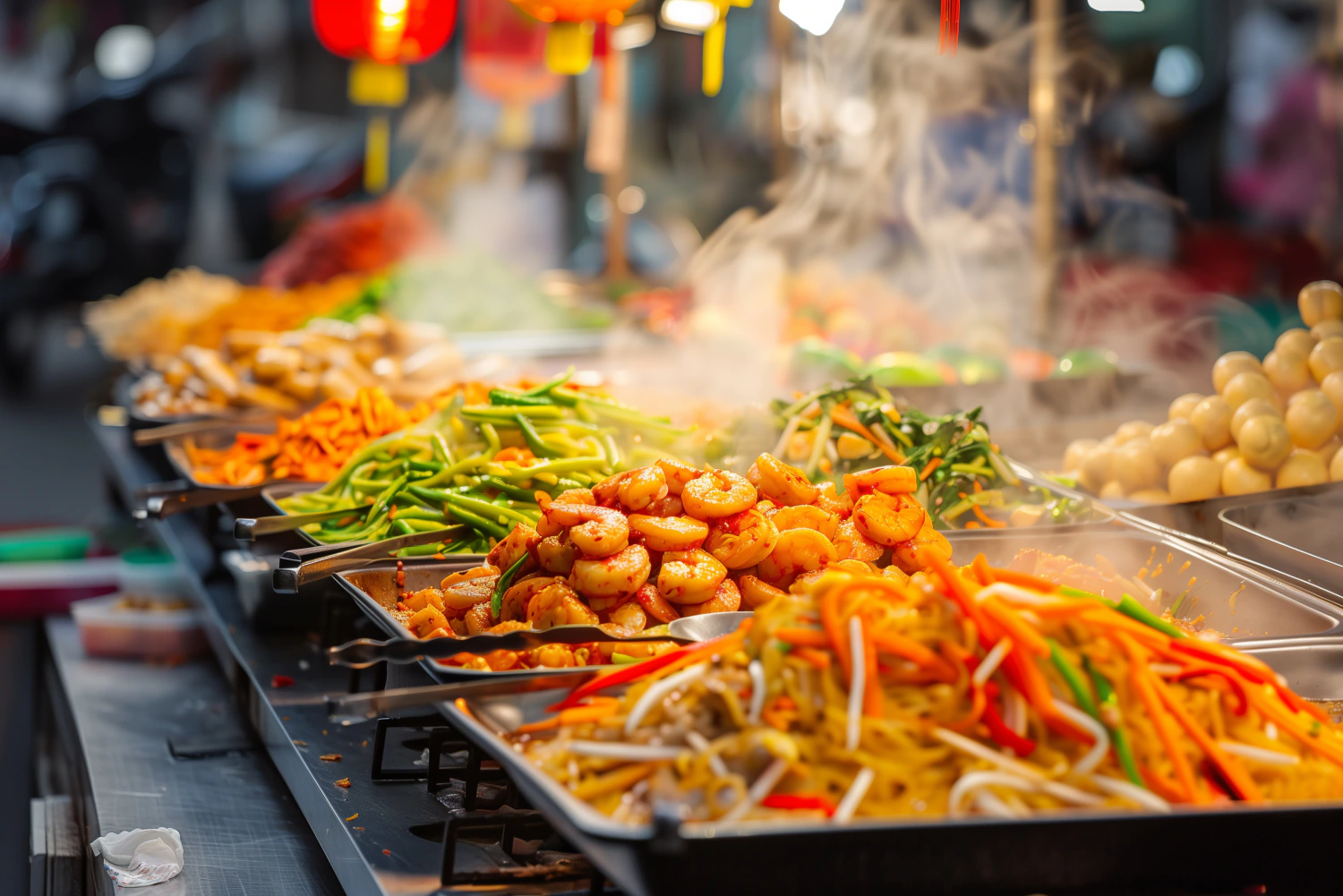
Street food is part of everyday life in Thailand and one of the easiest ways to discover different dishes. The choice ranges from small roadside stalls to large night markets with dedicated food areas. Much of the food is prepared right in front of you and ordered individually, so a market visit does not have to revolve around just one dish.
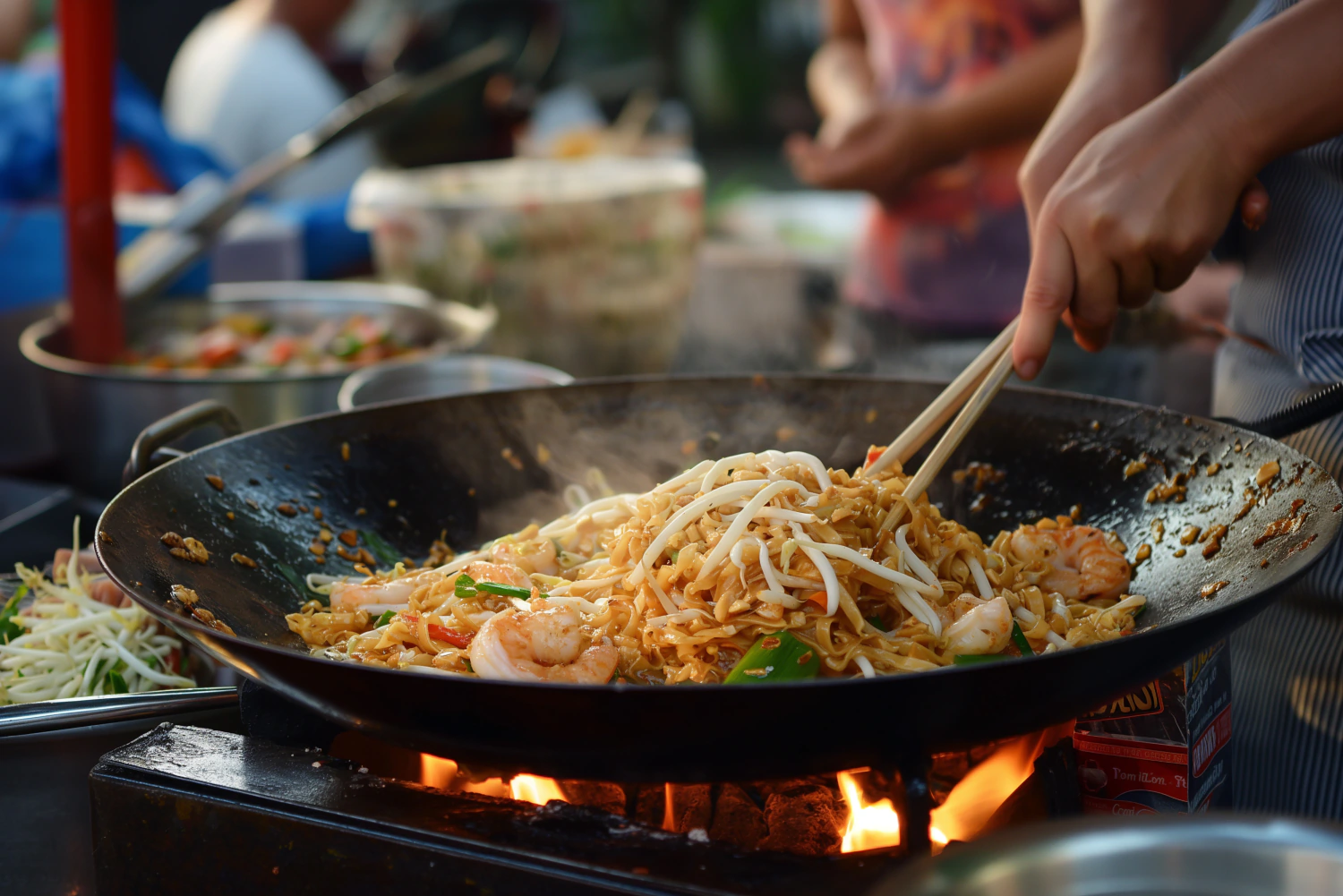
With Pad Thai, Pad Kra Pao with holy basil, grilled skewers, fried rice and different soups competing for attention, choosing where to start is not always easy. Fresh fruit, coconut ice cream, roti and mango sticky rice with coconut milk often come next. At larger markets, it is usually worth looking around before ordering everything from the first stall.
What you find depends on where you are. Bangkok offers an especially broad selection, including many vendors that specialize in a single dish. In Phuket Old Town, regional food is part of the experience alongside the historic streets, while markets in Chiang Mai feature more specialties from Northern Thailand.
We usually walk through the different sections of a night market before deciding what to order. It makes it easier to see which dishes are being prepared fresh, where local diners are eating and how prices are displayed. After that, we can pick a few dishes from different stalls instead of settling on just one place.
We cover the different night markets in Phuket, including which days they take place and which ones are worth visiting, in our guide to Night Markets in Phuket.
Regional Thai food
The food changes noticeably between Northern Thailand, Isan, Central Thailand and the south. It is not only the dishes themselves that differ. Herbs, curry pastes, side dishes and levels of heat are used in different ways from one region to another. Traveling through several parts of the country therefore reveals very different sides of Thai food.
Northern Thailand
Northern Thai food has a character of its own. The dish most closely associated with Chiang Mai is Khao Soi, a noodle soup with a creamy curry broth, soft egg noodles and a layer of crispy noodles on top. Lime, shallots and pickled vegetables are usually served on the side, allowing you to adjust the acidity and flavor as you eat.
Another specialty worth trying is Sai Ua, which is commonly found at markets and local restaurants. This Northern Thai sausage is made with herbs and spices such as lemongrass, makrut lime leaves and chili. Sticky rice is also common, along with spicy dips such as Nam Prik Noom and Nam Prik Ong served with vegetables.
Northeastern Thailand
Food from Isan is fresh, bold and often considerably spicier. Chili, lime, herbs, toasted rice and fermented ingredients give even simple dishes plenty of flavor. Som Tam is one of the best-known examples. The green papaya salad is freshly prepared in a mortar and can vary considerably in heat depending on the version.
Larb usually combines minced meat with lime, herbs and ground toasted rice. It works particularly well alongside Gai Yang, grilled chicken, Som Tam and sticky rice, bringing several classic Isan dishes together in one meal. These dishes are now available throughout Thailand, although the seasoning and level of heat can vary noticeably between restaurants.
Central Thailand
Central Thai food often brings together coconut milk, fresh herbs, curry pastes and sweet and sour flavors. Green curry, Tom Yum and Pad Thai are widely available throughout the region and especially in Bangkok. Tom Yum can be served as a clear soup or in a creamier version and is often prepared with shrimp.
Bangkok has a special place within the region because food from all parts of Thailand comes together here. The choice ranges from specialized street stalls and small family-run restaurants to modern menus that reinterpret familiar dishes. Even if a trip only covers a few regions, Bangkok makes it possible to experience many different sides of Thai food in one city.
Southern Thailand
Southern Thai food is often intensely seasoned. Chili, fresh turmeric, pepper, shrimp paste and regional curry pastes play an important role, along with fish and seafood. Typical dishes include Gaeng Som, a sour curry without the creamy richness of many coconut milk curries and Khua Kling, a dry curry in which the spice paste is cooked directly with the meat.
Massaman curry often provides a milder contrast, with warming spices, potatoes and a slightly sweet sauce. Phuket also has strong Chinese influences. These can be seen in dishes such as Moo Hong, slow-cooked pork belly in dark soy sauce, as well as local noodle dishes found on many menus around Phuket Town.
Fish and seafood along Thailand's coast
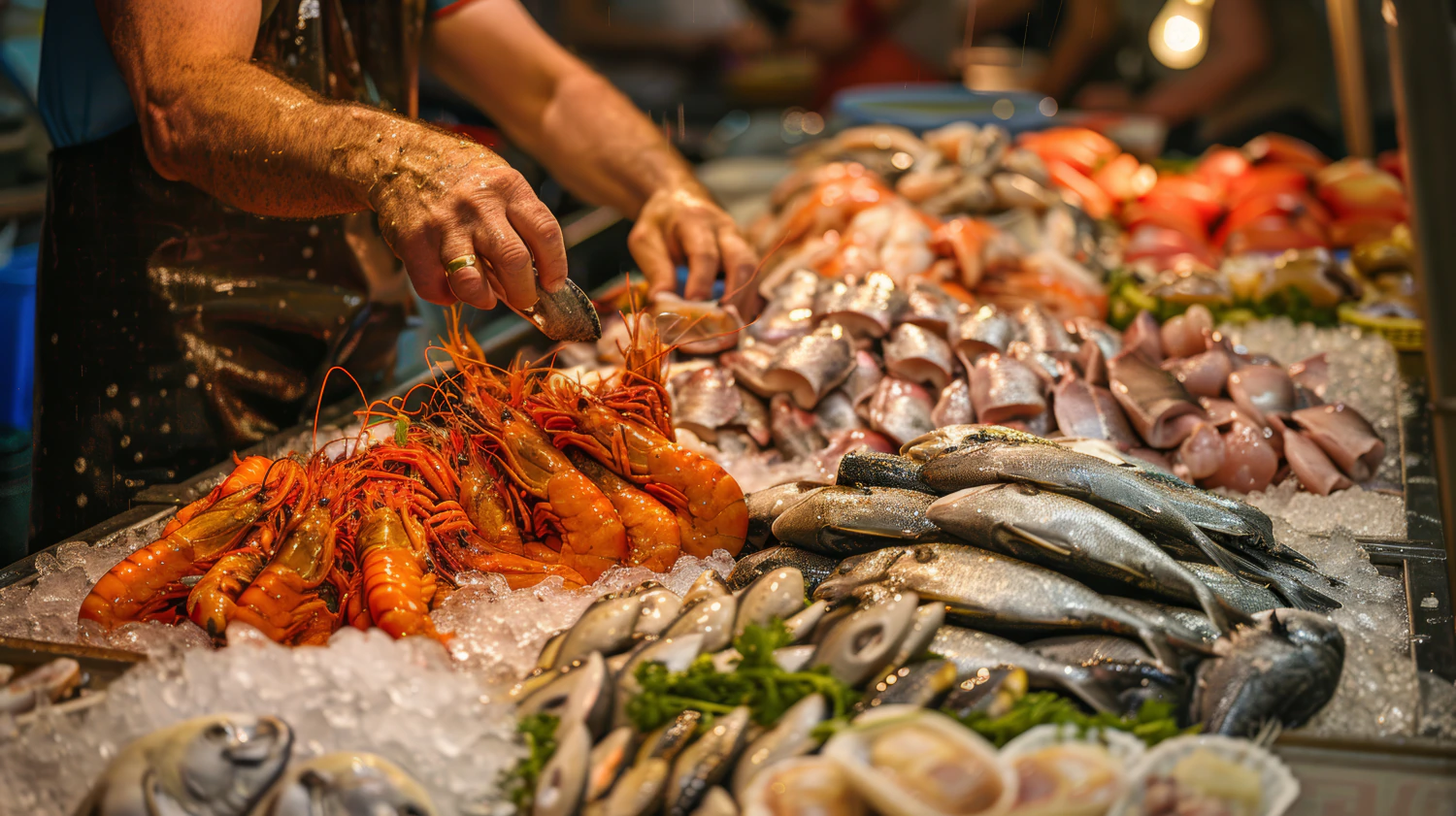
Fish and seafood are an important part of the local food scene in Phuket, Khao Lak, Koh Samui, Krabi and Hua Hin. What appears on the menu depends on the location, the season and the daily selection. Shrimp, squid, crab, shellfish and whole fish are among the most common choices at seafood restaurants along Thailand's coast.
Preparation is often simple. Whole fish may be grilled, steamed or served with lime, garlic and chili. At some Thai seafood restaurants, you choose the fish or seafood directly from a display and then decide how you would like it prepared.
When fish or seafood is priced by weight, it is worth checking the price before ordering. Make sure it is clear whether the quoted price applies to 100 grams, 500 grams or one kilogram and whether cooking is included. With larger fish or crab, the difference can have a noticeable impact on the final bill.
Floating markets near Bangkok
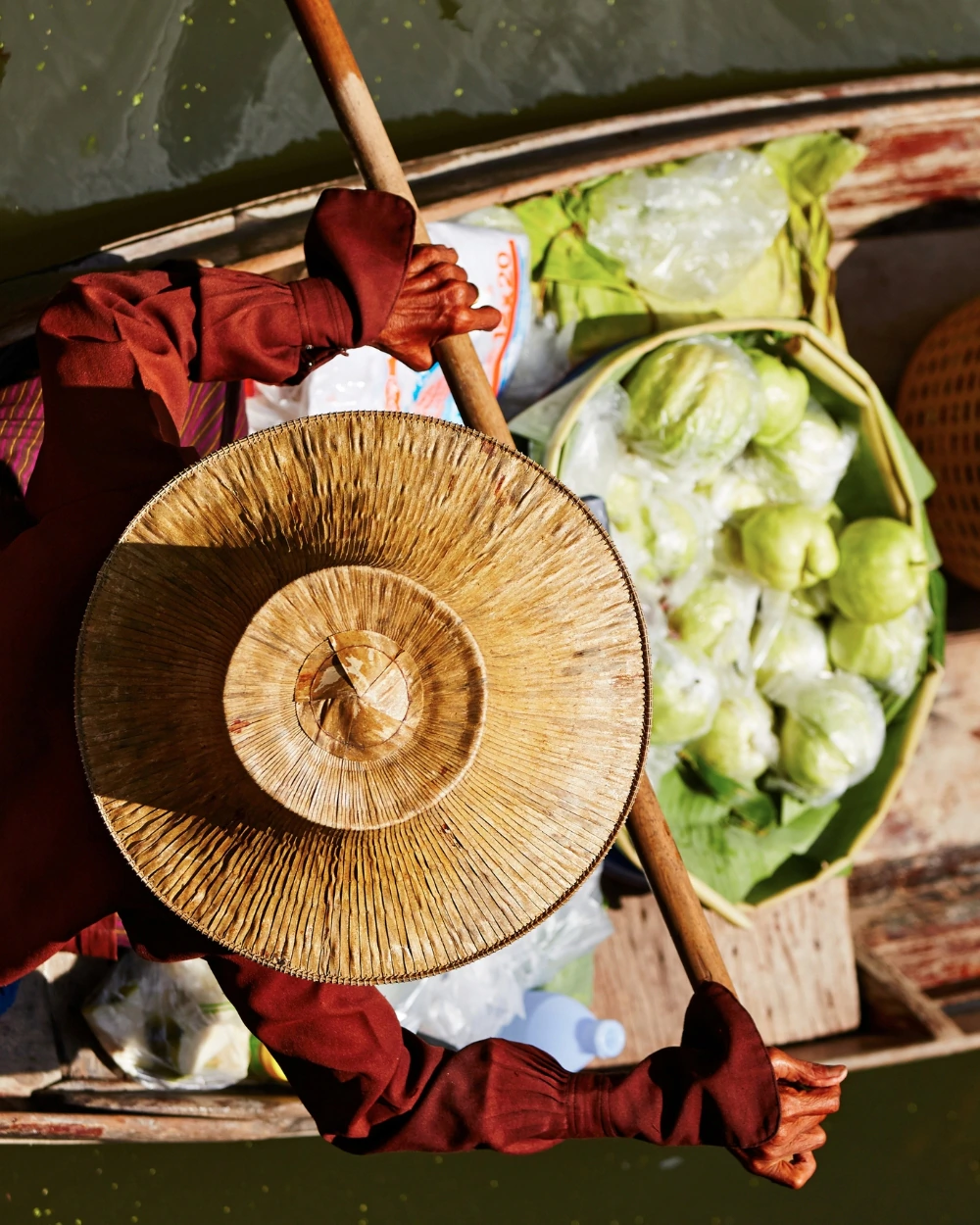
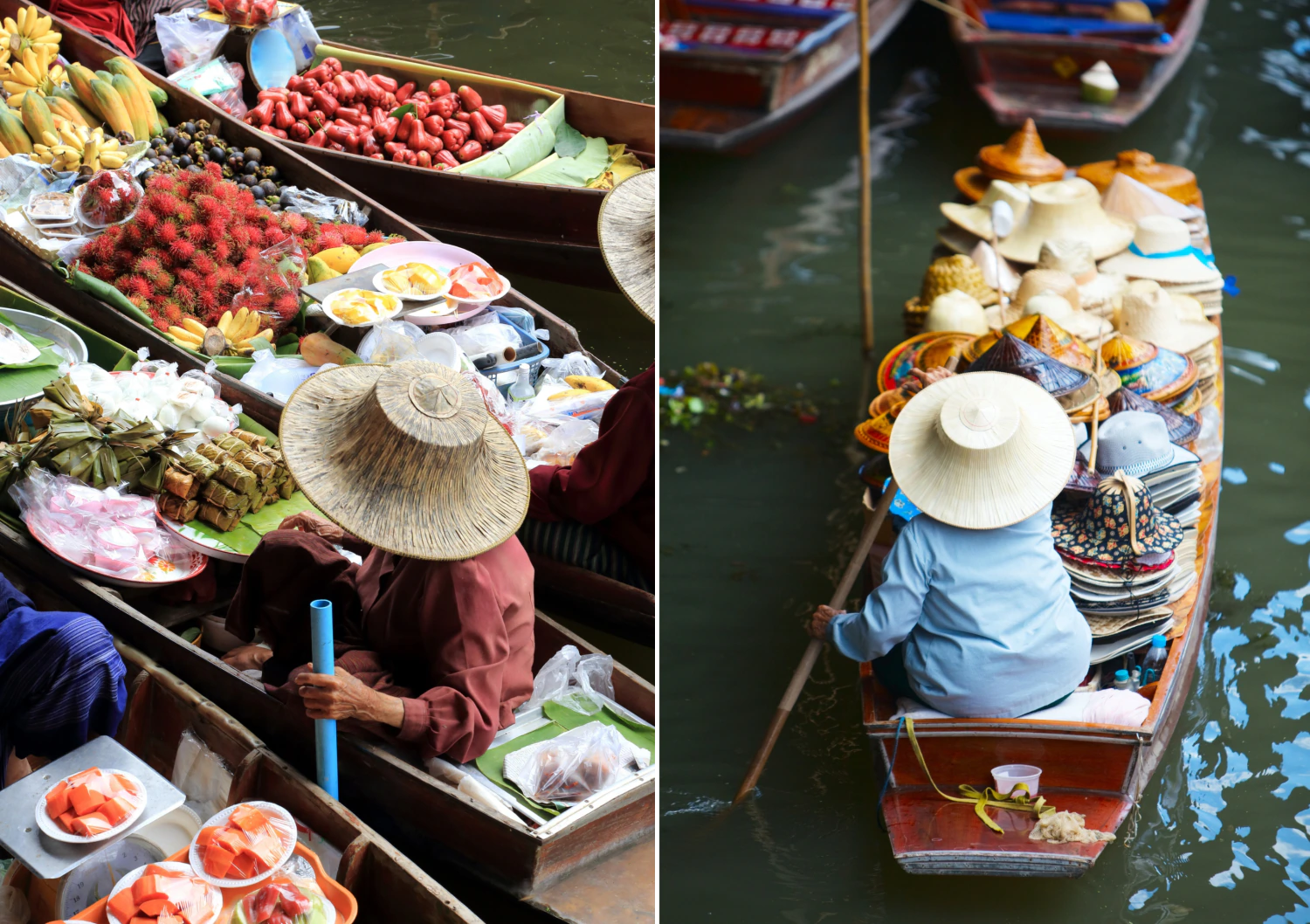
A floating market is about more than grabbing a quick lunch. The canals, boats and surrounding neighborhoods are part of the experience and many visits also include a boat ride through the area. Which market fits your trip better depends mainly on the time of day, the atmosphere you are looking for and how much travel time you want to allow.
Damnoen Saduak is located in Ratchaburi Province and is mainly a morning market. Amphawa lies in Samut Songkhram and becomes livelier later in the afternoon and into the evening. Both floating markets are outside Bangkok, so the journey there and back should be factored into the day.
If your main goal is simply to try different Thai dishes, there are easier options within Bangkok that do not require a longer transfer. A trip to one of the floating markets makes more sense when the canals, the boat ride and the market itself are part of what you want to experience.
We explain the differences between Damnoen Saduak, Amphawa and other options in more detail in our guide to Floating Markets near Bangkok.
Fine dining and unique restaurants
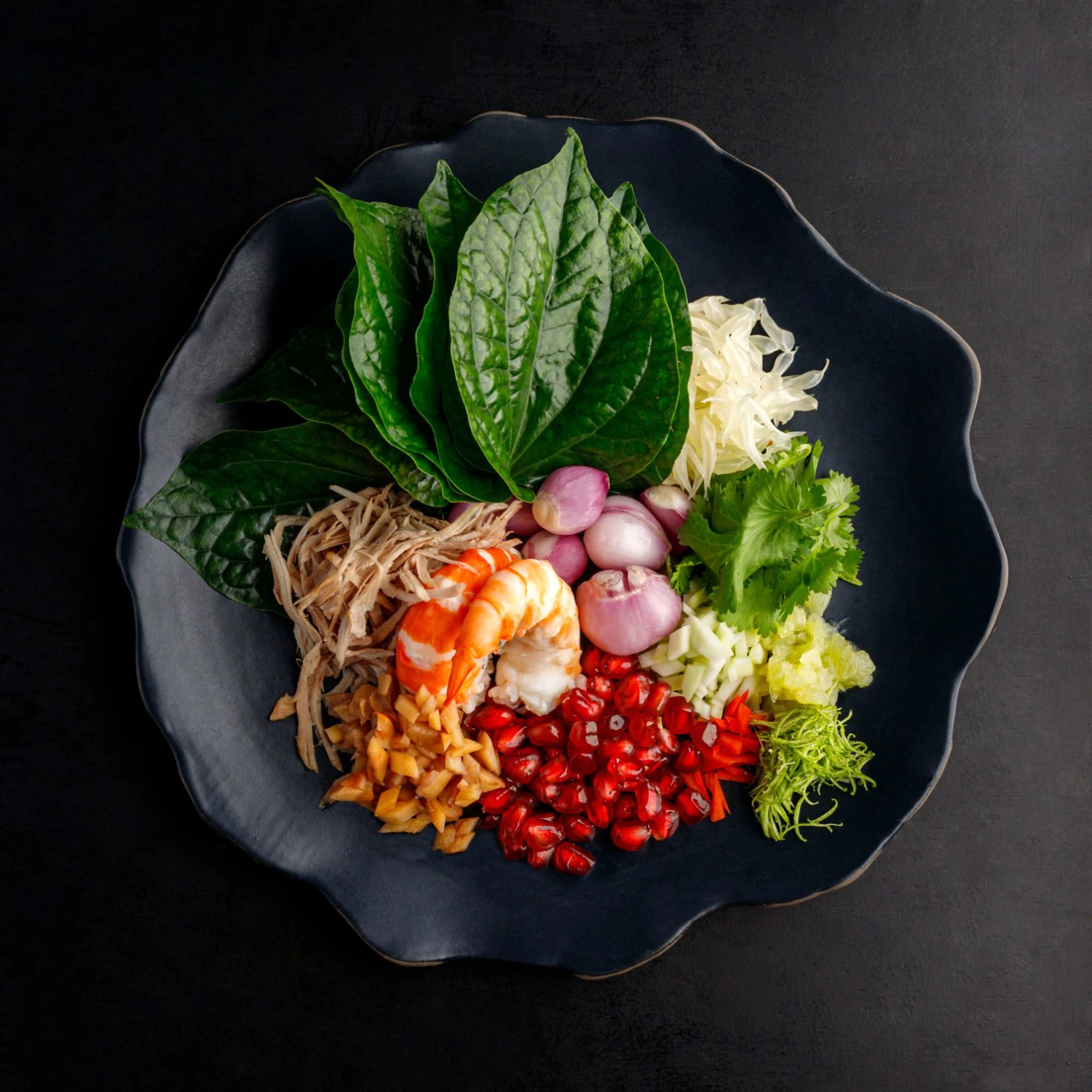
Beyond night markets and local restaurants, Thailand also has plenty of places worth planning an entire evening around. Some reinterpret classic Thai dishes, while others focus on regional ingredients or combine different culinary influences. Bangkok has an especially diverse restaurant scene, while in Phuket many of the most interesting options are found within distinctive resorts.
You usually do not need to stay at the resort to dine there. Black Ginger at The Slate is reached across a lagoon and combines Thai cuisine with dark timber pavilions and an unusual arrival by raft. Here, the setting and the journey to the restaurant are as much a part of the evening as the meal itself.
Jaras at the InterContinental Phuket Resort takes a more contemporary approach to traditional Thai family recipes. The restaurant is listed in the Michelin Guide 2026 and works predominantly with locally sourced ingredients.
Not every memorable restaurant in Phuket falls into the fine dining category. [Three Monkeys Restaurant] is a much more relaxed option, with open-air seating built into a forested hillside. Its menu combines Southern Thai specialties with Japanese and international dishes. The restaurant is located within Hanuman World but can be visited independently of a zipline tour.
We cover more restaurants worth considering for a special evening, along with the differences between them, in our guide to Fine Dining in Phuket.
Thai cooking classes
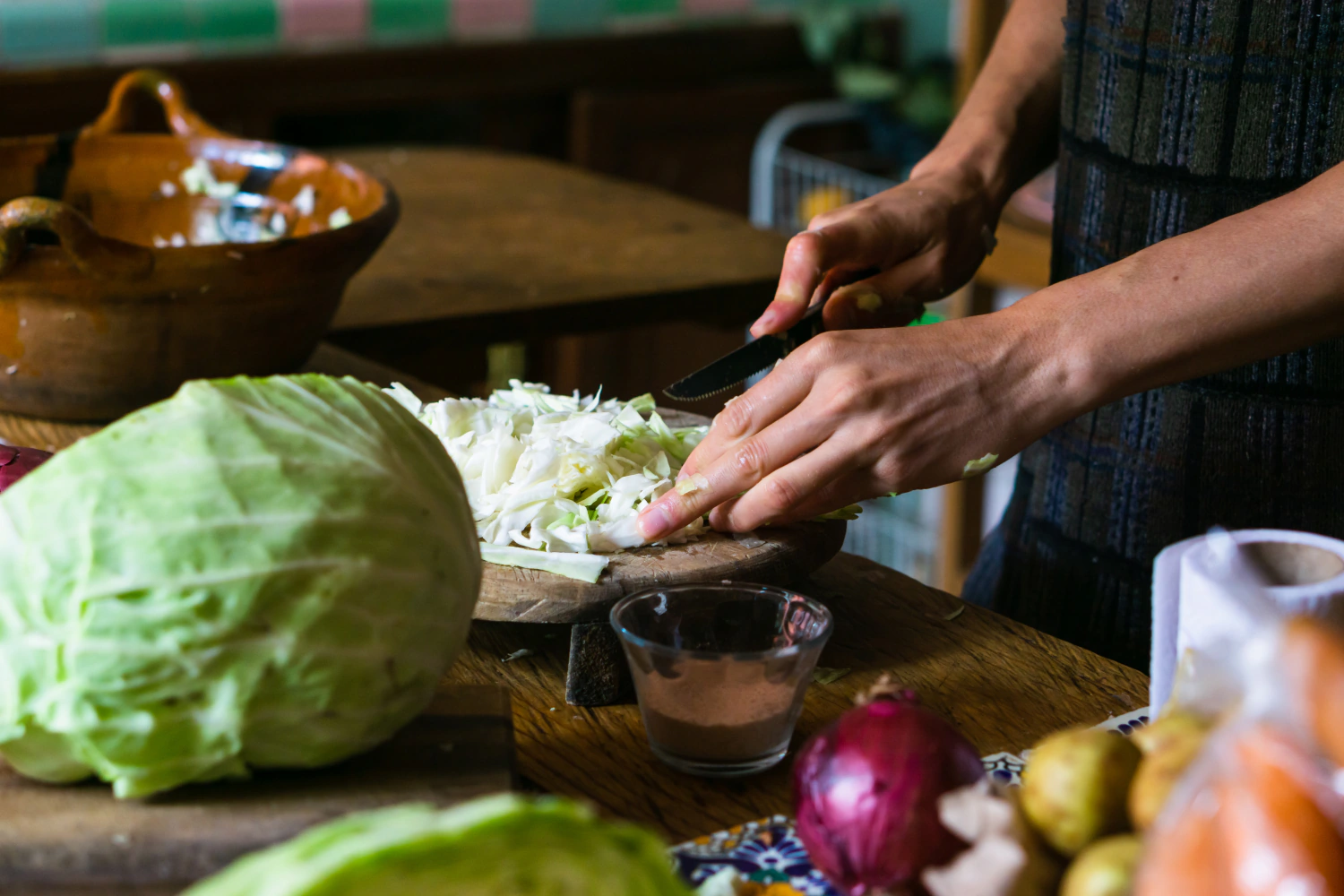
At a restaurant, the finished dish arrives at the table. A Thai cooking class shows what goes into it, from curry pastes, herbs and spices to the individual steps behind each recipe. Some classes begin with an introduction to local ingredients or a visit to a nearby market.
You will usually prepare several dishes under guidance. Depending on the class, this might include curries, soups, stir-fried noodles or desserts. Many Thai cooking classes take around half a day. Before booking, it is worth checking the menu, group size and whether a market visit is included.
Cooking classes are widely available in Bangkok, Chiang Mai and Phuket, as well as at a number of resorts. Vegetarians, vegans and anyone who needs to avoid certain ingredients should check in advance which dishes can be adapted.
Vegetarian food and allergies in Thailand
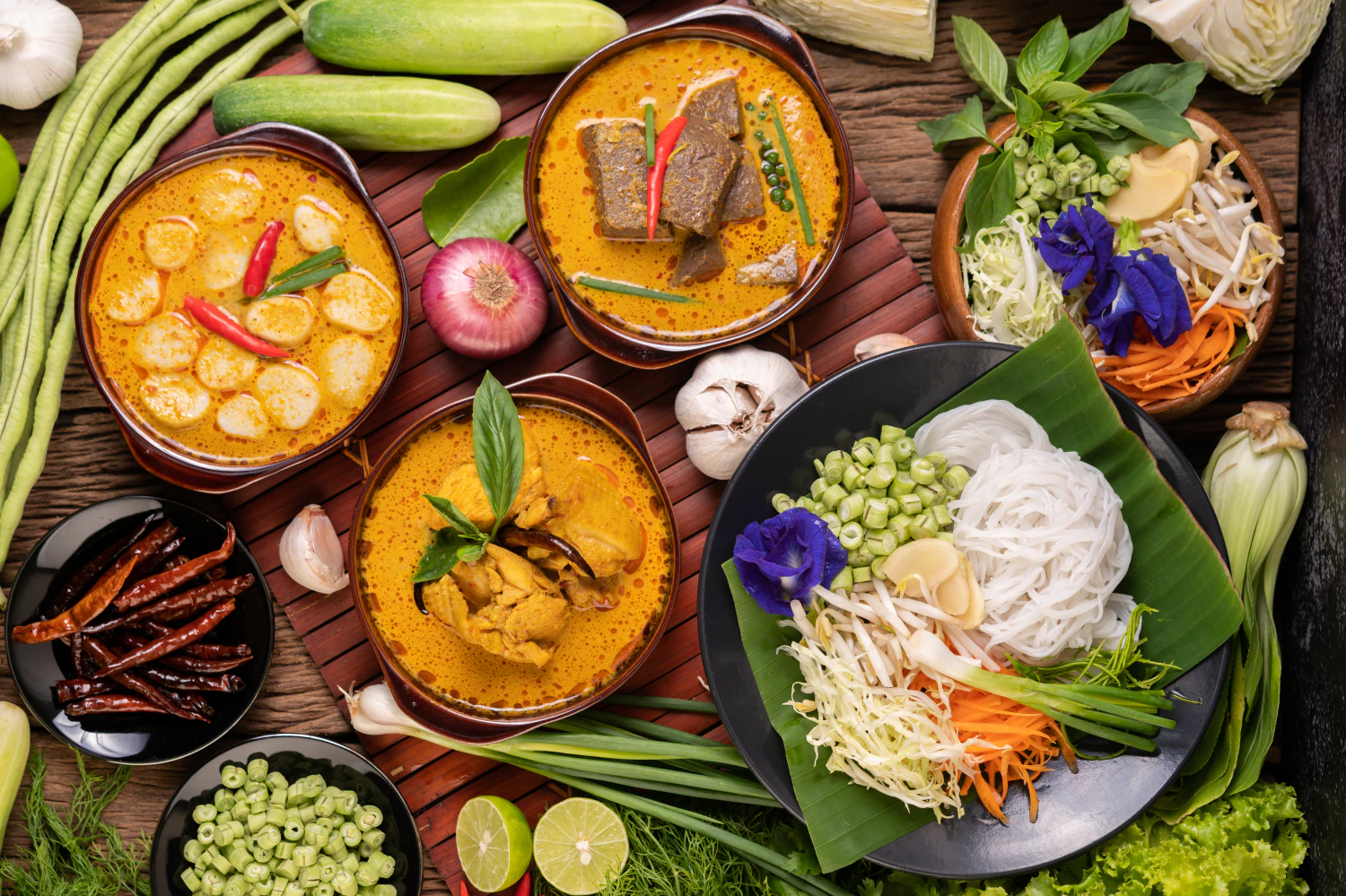
Vegetarian dishes are available at many restaurants, but the ingredients are not always obvious from the name or menu description. Fish sauce, oyster sauce and shrimp paste can also be used in vegetable dishes, curries, soups and sauces.
If you are vegan, ask specifically about fish sauce, oyster sauce and shrimp paste rather than only checking whether a dish contains meat or fish. Anyone with food allergies should clearly mention peanuts, shellfish, soy or any other ingredients that need to be avoided.
For a serious food allergy, carrying a written explanation in Thai can be helpful. It should state not only the specific allergen but also whether even small amounts or shared preparation are a problem. Ingredients and preparation should still be confirmed each time you order.
How to experience Thai food in Thailand
A single meal or a list of famous dishes can hardly capture the regional differences in Thai food. A night market in Phuket, Khao Soi in Chiang Mai and a seafood restaurant along the coast each reveal a different side of the country.
For an easy introduction, start with a night market where you can try several smaller dishes. Regional restaurants offer a better sense of what shapes the local food, while a distinctive resort restaurant can turn dinner into an entire evening. A cooking class is especially worthwhile when you want to understand the ingredients and preparation as well as the flavors.
There is no need to work through a long list. A few well-chosen markets, regional specialties and restaurants can provide a varied introduction to Thai food when they fit naturally into your route and interests.